.png)
B.Tech. in Artificial Intelligence and Data Science, is a four-year engineering undergraduate degree programme. Artificial Intelligence’s major purpose is to develop an inference engine and knowledge-based systems to solve problems as an expert. Students are taught various computer science languages through which they can communicate with computer machines for the above purposes. The B.Tech. in Artificial Intelligence is aimed at helping students get a strong foundation in Computer Science and artificial intelligence in the first two years of courses. The development of intelligent machines as AI products, intelligent software as computer software, or applications using a combination of machine learning and artificial intelligence techniques will be covered in the next two years of courses.
The Department offers B.Tech. (Artificial Intelligence and Data Science) program, affiliated with Anna University, Chennai, and approved by AICTE. We have a team of 5 highly qualified faculty members with M.E. and Ph.D. credentials. All classrooms and seminar halls are spacious and equipped with OHP/LCD projectors, ensuring an effective teaching–learning process.
In alignment with our vision and our motto, “To live to learn; learn to serve,” the Department emphasizes real-time projects for final-year students, ensuring they gain exposure to practical, industry-relevant challenges.
A field of computer science that trains computers to replicate the human vision system. This enables digital devices (like face detectors, QR Code Scanners) to identify and process objects in images and videos, just like humans do.
The primary objectives of the AI Mission includes establishing robust computing powers for AI within India. The mission seeks to enhance services for startups and entrepreneurs while fostering AI applications in critical sectors such as agriculture, healthcare, and education.
To provide graduates with the proficiency to utilize the fundamental knowledge of basic sciences, mathematics, Artificial Intelligence, data science and statistics to build systems that require management and analysis of large volume of data.
To enrich graduates with necessary technical skills to pursue pioneering research in the field of AI and Data Science and create disruptive and sustainable solutions for the welfare of ecosystems.
To enable graduates to think logically, pursue lifelong learning and collaborate with an ethical attitude in a multidisciplinary team.
Engineering Knowledge: Apply the knowledge of mathematics, science, engineering fundamentals, and an engineering specialization to the solution of complex engineering problems.
Problem Analysis: Identify, formulate, review research literature, and analyze complex engineering problems reaching substantiated conclusions using first principles of mathematics, natural sciences, and engineering sciences.
Design & Development of solutions: Design solutions for complex engineering problems and design system components or processes that meet the specified needs with appropriate consideration for the public health and safety, and the cultural, societal, and environmental considerations.
Conduct investigations of complex problems: Use research-based knowledge and research methods including design of experiments, analysis and interpretation of data, and synthesis of the information to provide valid conclusions.
Modern Tool Usage: Create, select, and apply appropriate techniques, resources, and modern engineering and IT tools including prediction and modeling to complex engineering activities with an understanding of the limitations.
The engineer and society:
Environment and sustainability: Understand the impact of the professional engineering solutions in societal and environmental contexts, and demonstrate the knowledge of, and need for sustainable development.
Ethics: Apply ethical principles and commit to professional ethics and responsibilities and norms of the engineering practice.
Individual and team work: Function effectively as an individual, and as a member or leader in diverse teams, and in multidisciplinary settings.
Communication: Communicate effectively on complex engineering activities with the engineering community and with society at large, such as, being able to comprehend and write effective reports and design documentation, make effective presentations, and give and receive clear instructions.
Project management and finance:Demonstrate knowledge and understanding of the engineering and management principles and apply these to one’s own work, as a member and leader in a team, to manage projects and in multidisciplinary environments.
Life-long learning: Recognize the need for, and have the preparation and ability to engage in independent and life-long learning in the broadest context of technological change.
Graduates should be able to evolve AI based efficient domain specific processes for effective decision making in several domains such as business and governance domains.
Graduates should be able to arrive at actionable Fore sight, Insight , hind sight from data for solving business and engineering problems.
Graduates should be able to create, select and apply the theoretical knowledge of AI and Data Analytics along with practical industrial tools and techniques to manage and solve wicked societal problems.
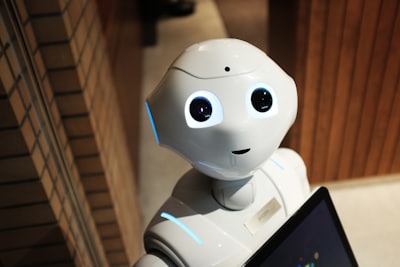
Industry-grade robotics, automation, and sensor equipment.
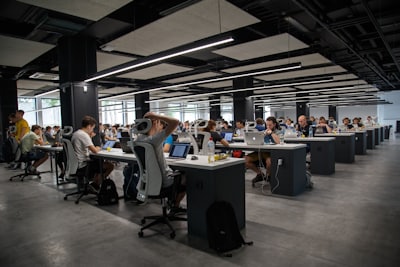
GPU-enabled workstations for ML training and big data processing.
Neural network research, NLP tools, and computer vision systems.

Capstone project development and prototype testing space.
Dedicated and qualified faculty with academic and industry experience
Faculty names and detailed profiles will be updated. Contact the department for current staff information.
Students undergo training in Python, R, TensorFlow, and cloud platforms. The department collaborates with the Placement Cell for campus drives focused on data science and AI roles.
| S.NO | NAME OF THE FACULTY | NATIONAL/INTERNATIONAL | TITLE OF JOURNAL / CONFERENCES (INCLUDE THE DOI, PUBLISHER) | SJR SNIP IPP H INDEX | MONTH & YEAR OF PUBLICATION |
|---|---|---|---|---|---|
| 1 | Ms.D.Sujatha | International Journal | Title: “A Complete Review of artificial Intelligence Tools in Various Fields in Education” Author: Ms.D.SUJATHA Journal: ADVANCED RESEARCH AND INTERDISCIPLINARY SCIENTIFIC ENDEAVOURS | VOL.2, NO. 5 | MAY 2025 |
| 2 | Ms.R.Ramya | International Conferences | Title: “Continuous Authentication for IoT Healthcare ” Author: Ms.R.Ramya Conferences Name: Deep Sciences for Computing and Communications(IconDeepCOM-2025) | April 2025 |
Academic collaborations with industry partners for internships, projects, and knowledge transfer. View all MoUs →


60 seats — Shape the future with artificial intelligence and data-driven innovation.